In short. Blind review for scholarships and awards means reviewers score the merit of an application without seeing anything that identifies the person or the nominator. Four things have to be hidden: the applicant's identity (shown as a case number), names inside written answers and attachments, sensitive eligibility answers such as income, category and disability, and the identity of whoever nominated a candidate. Hide them for the whole scoring round, not just the first screen, and keep a separate eligibility step so the facts you hide are still checked by someone.
Most committees say their review is blind. Fewer can say precisely what the reviewer could see. The usual leak is not a deliberate one: a name sits in the first line of a personal statement, a referee letter is signed, a school is named in an essay, and the "blind" list shows the applicant's full name in a column nobody thought to remove. This article sets out what to hide, when to hide it, and how to check that it stays hidden.
What Blind Review Is, and What It Is Not
Blind review is a scoring condition, not a secrecy policy. The programme office still knows who applied. Eligibility checkers still see income certificates. The point is narrower: the people assigning merit scores should have no access to information that could bias a score and that the rubric does not ask about.
It is also different from anonymising the whole record. A reviewer scoring an essay on leadership needs the essay, the activities list and perhaps the level of study. They do not need the applicant's name, caste or category, home district, parents' occupation or the person who nominated them. Practice in grant and fellowship review, and in hiring research more broadly, is to remove cues that invite a judgement about the person rather than the work. It reduces a known risk; it is not a guarantee of fairness.
A useful test: for each item a reviewer can see, ask which rubric criterion it serves. If the answer is none, hide it.
The Four Things to Hide
Each row needs a decision about the artefact, not only the screen. If the applicant's name is hidden in the list but visible in the PDF the reviewer downloads, the round is not blind.
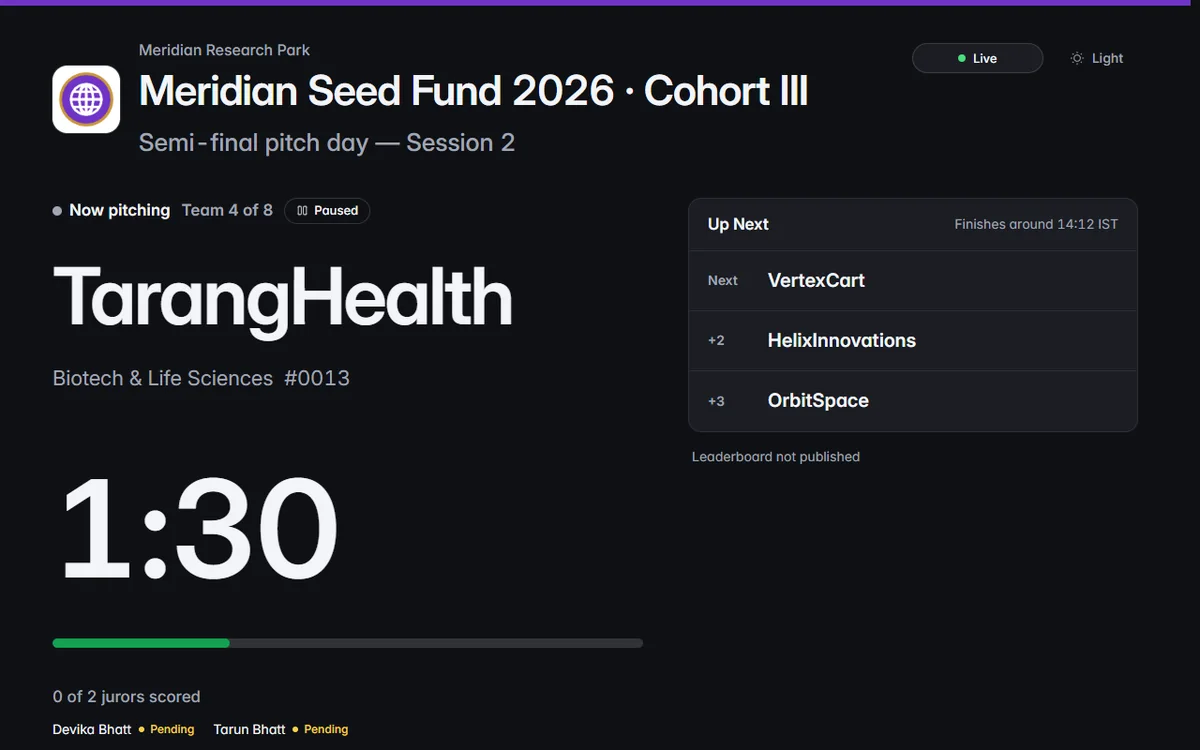
Replace Identity with a Case Number
Use a case number that carries no meaning. Do not derive it from the application date, the applicant's initials or a roll number. If case numbers run in submission order, a reviewer who has seen two applications from the same college may recognise a pattern, and late submitters become identifiable by their number. Issue case numbers in an order unrelated to submission time, and use fresh ones if you want rounds to be independent.
Decide where the mapping lives. It belongs with the programme office, with access limited to the people who need to move from a case number back to a person, typically at the decision stage or when an applicant queries a result. Write down who those people are.
Remove Names from Written Answers
This is the step most programmes skip, because it is tedious. Applicants write "At St Xavier's College, where I studied" and "my mentor, Professor Rao, told me". A reviewer who reads that is no longer blind to institution, however carefully the header was masked.
There are three workable approaches, in rising order of effort:
- Instruct the applicant. Tell applicants in the form not to include their name, college or the names of referees in free-text answers. Cheap, and worth doing, but unreliable.
- Redact before review. A staff member or a tool removes names, institutions and places from long answers and attachments before they go to reviewers.
- Reviewer-side masking. The system shows the reviewer a version with names and contact details held back, while the original is kept intact for the programme office.
Whichever you choose, keep the original. Redaction is for the reviewer's view. Destroying the source copy makes disputes impossible to resolve.
Attachments need their own rule. A scanned certificate is an image of a name. Either exclude certificates from the reviewer's pack and have the eligibility team check them, or accept that those documents are not part of a blind round.
Keep Sensitive Answers for Eligibility Only
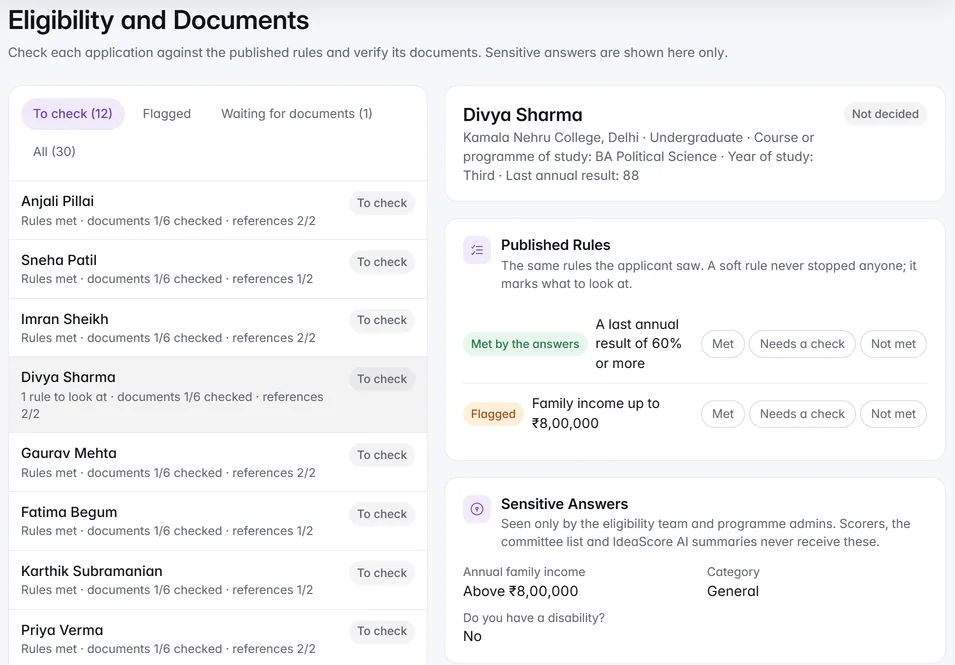
Scholarships routinely ask questions that are necessary for deciding eligibility and harmful for deciding merit: annual family income, social category, disability status, first-generation status. The principle is separation of purpose.
- Collect only what the rules need. If the scholarship is for families under a stated income, you need a yes or no against that threshold, supported by a document, not a free-text account of family finances.
- Mark the question as sensitive at design time, so every later screen treats it the same way.
- Show the answers only to the eligibility team, beside the published rules they are checking against. Reviewers, committee lists and any automated summaries should never receive them.
- Set a retention period. Once eligibility is decided and any appeal window has closed, there is rarely a reason to keep income and disability data. Decide the period before collecting.
This also helps with data protection duties, which expect you to collect personal data for a stated purpose and keep it no longer than that purpose needs.
Hide Nominators from the Jury
Awards run on nominations, and the nominator is often a stronger signal than anything in the file. A nomination from a well-known professor tilts a jury before a word is read. Two rules keep this clean:
- Jurors see the nominee and the case for them, never who put them forward. If the nomination statement itself reveals the nominator ("As her thesis supervisor for four years..."), ask nominators to write without role references, or have staff edit those references out.
- Ask the nominee to agree before the jury reads the nomination. Consent first avoids a jury spending time on someone who does not want the award, and it gives the nominee a chance to correct facts.
When to Blind: A Round-by-Round Plan
Blind scoring is rarely appropriate for every stage. A practical sequence for a scholarship:
- Eligibility check. Not blind. Staff need identity, documents and sensitive answers.
- Merit scoring. Blind. Case numbers, redacted written answers, no sensitive answers.
- Shortlist discussion. Mostly blind. The committee debates the work by case number and ranks.
- Interviews. Not blind, by nature. Score against a rubric written in advance and keep the interview score separate from the file score.
- Final decision. The chair confirms, the programme office maps case numbers back to people, and conflicts are checked once more against names.
Say in the call document which rounds are blind. Applicants and reviewers both behave better when they know.
Keeping It Blind in Practice
Blinding fails quietly. These checks catch most failures.
- Open the reviewer's view yourself. Preview one application as a reviewer would see it, read every screen and download every attachment.
- Search for leaks. Search the reviewer-visible text for the names of institutions in your cohort, common surnames and email-address fragments.
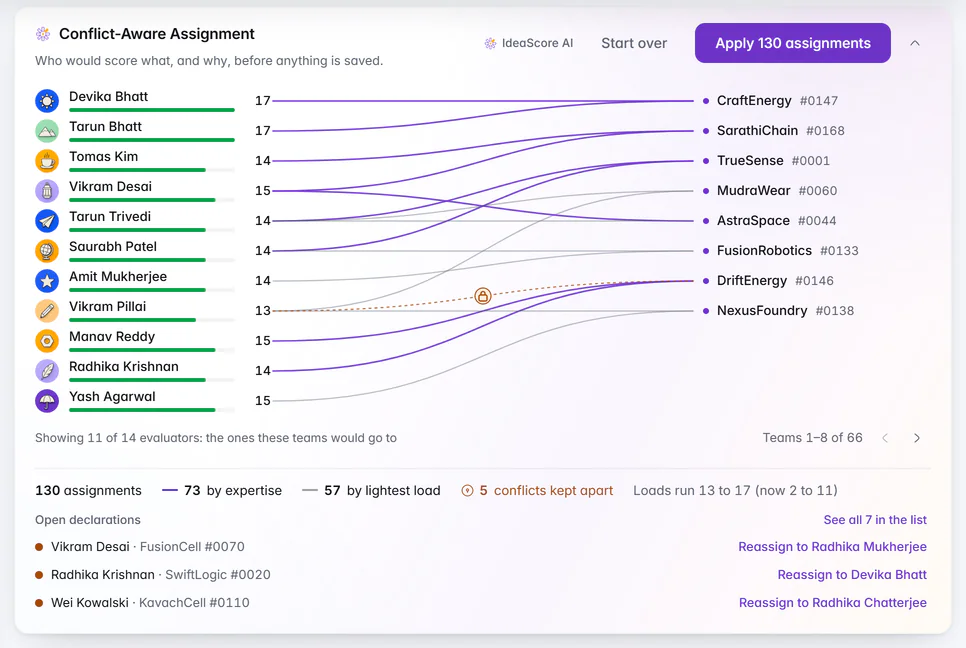
- Brief reviewers on what to do when they recognise someone. It happens in small fields. The right response is to declare it and have the application reassigned, not to try to ignore it. Our article on conflicts of interest in grant review covers the mechanics.
- Keep committee discussion clean. Talk about case numbers, and do not let it drift into "isn't that the one from our own department".
- Record the settings. Note which rounds were blind and what was hidden, so the decision file shows the process that was used.
How IdeaScore Handles It
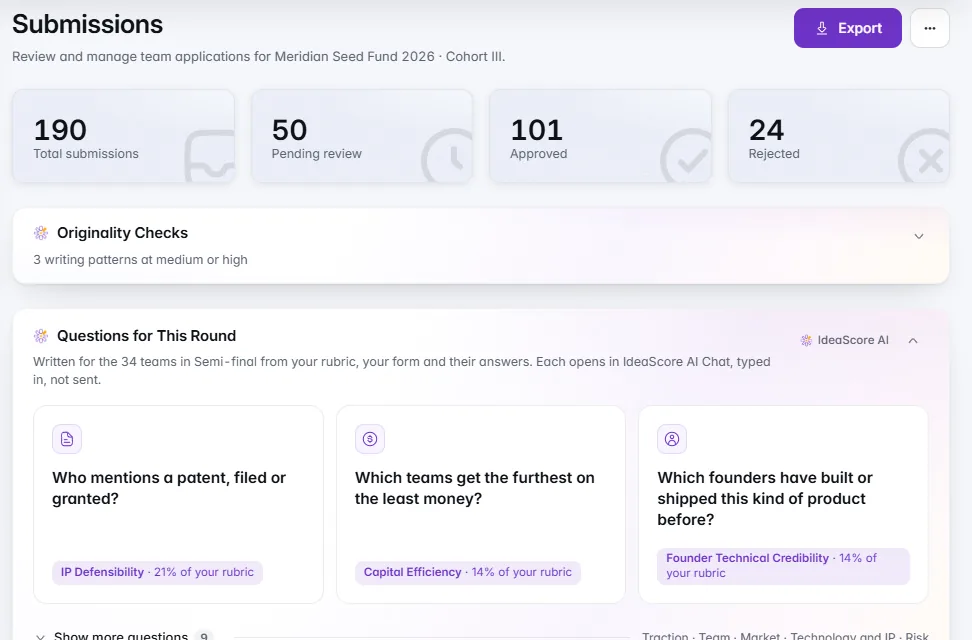
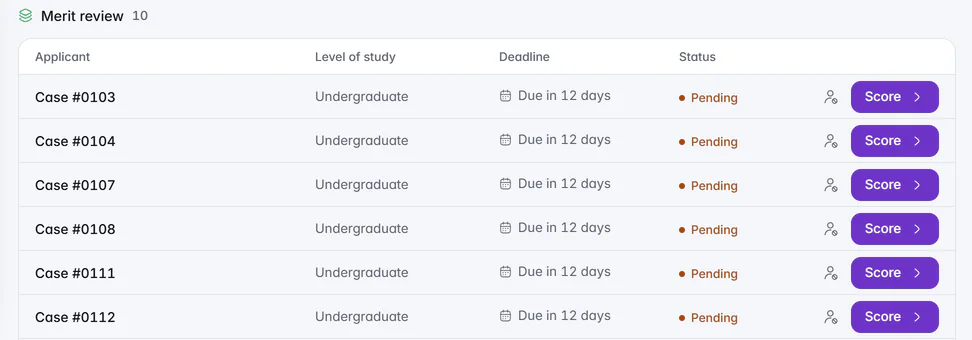
In IdeaScore, a blind round shows each applicant to a reviewer by case number, and in programmes where applicants are people the setting carries through to written answers, with names removed from them. Questions marked as sensitive reach only the people who verify eligibility, beside the published rules each application is checked against, and not scorers, committee lists or IdeaScore AI summaries. For awards, the jury sees the nominee and not the nominator, and a nominee can be asked to agree before the jury reads the nomination. Decks can be masked for evaluators too, with a preview before you confirm and the original always kept; pages in scripts that cannot be checked for names are held back from blind reviewers rather than shown.
None of this replaces the decisions above. You still choose which rounds are blind and what counts as sensitive, and you should still open a reviewer's view before the round starts.
A Checklist Before You Open Scoring
- The rubric asks nothing that needs identity, category or income.
- Case numbers carry no meaning and the mapping has a named owner.
- Written answers and attachments are redacted or masked for reviewers, and originals are kept.
- Sensitive questions are marked, limited to eligibility, and have a retention period.
- Nominators are hidden from the jury, and nominees have consented.
- You have previewed the reviewer's view and found no names.
- Reviewers know how to declare a recognised applicant.
- The call document states which rounds are blind.
Blind review is a modest discipline with a clear payoff: the score on the page reflects the work on the page. The effort is mostly in the unglamorous parts, the attachments, the free-text answers and the checking, and that is where it is worth spending the time.